


COLIBRI PIGMENTS LLC
Azurite
Azurite
Couldn't load pickup availability
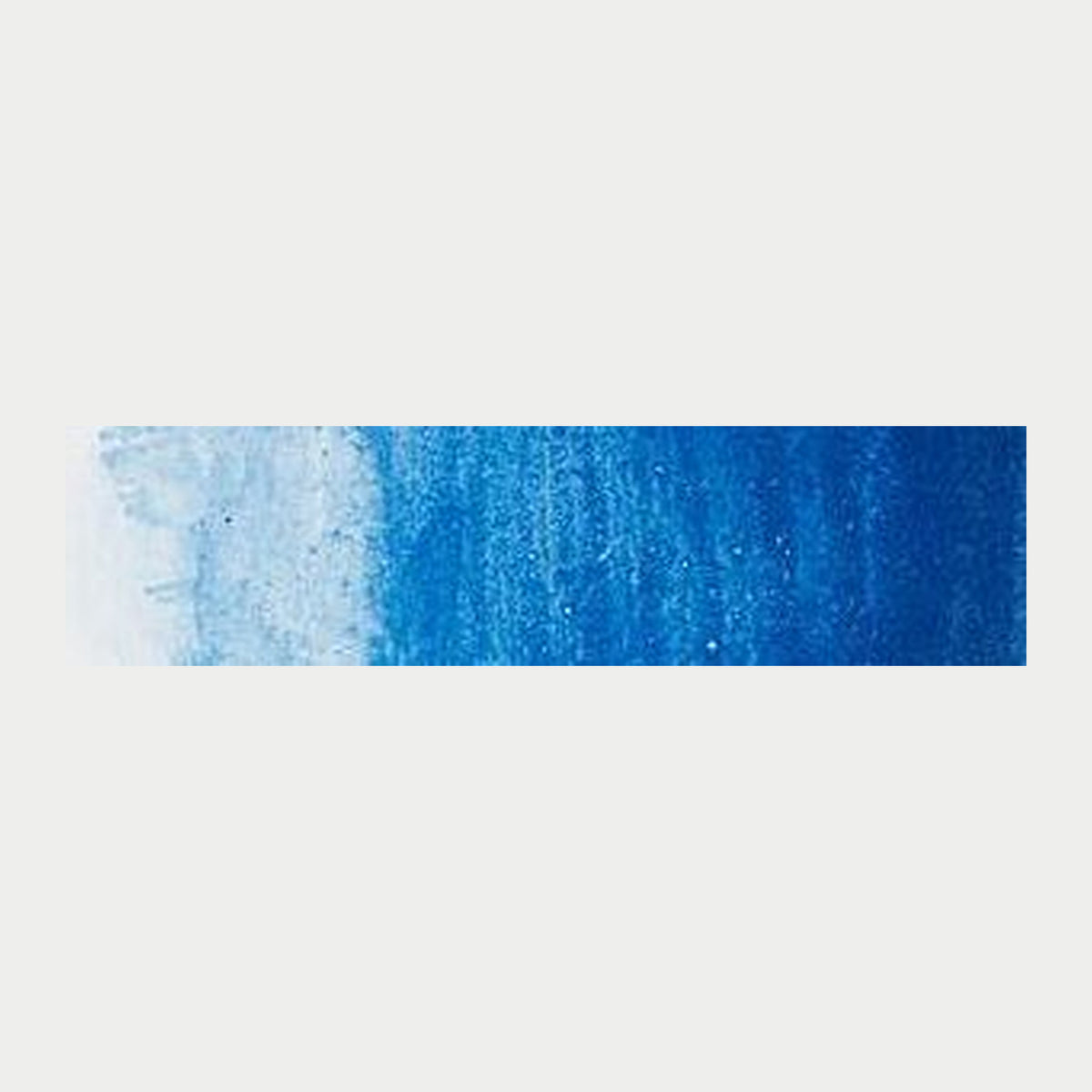
Azurite is a natural blue pigment made from the copper carbonate mineral azurite, cleaned by levigation and flotation for a clean, saturated color. It was the main blue of medieval and Renaissance painting and gives brilliant mid to deep blues in egg tempera, watercolor and gouache; in oil it reads darker and more transparent.
Key facts
- Color: blue; coarser grains give a deeper blue, finer grinds a lighter, slightly greenish blue
- Pigment type: Natural mineral pigment
- Colour Index: PB30 (C.I. 77420)
- Composition: basic copper carbonate, Cu3(CO3)2(OH)2
- Also known as: mountain blue, blue bice
- Opacity: semi-transparent in oil; more covering in tempera and watercolor
- Lightfastness: 8 of 8 on the Blue Wool Scale (supplier data)
- Chemical resistance: dissolves in acids (it is a carbonate); can turn greenish in alkaline wet lime
- Suitable for: oil, acrylic, egg tempera, watercolor, gouache
- Not recommended for: true fresco (wet lime can turn it green)
- Packaging: 50 g jar · 1 kg bag
How to use
Mix the powder into your binder with a palette knife or muller: egg yolk for tempera, gum arabic for watercolor and gouache, acrylic medium, or linseed oil. Grind gently — over-grinding makes azurite paler and greener. In oil it becomes darker and semi-transparent, so use it as a glaze or over a light ground. Keep it away from acids and do not mix it with sulfide pigments such as orpiment, realgar or cinnabar, which can darken copper blues.
About azurite
From the Middle Ages to the 17th century azurite was the most widely used blue in European painting: far cheaper than lapis lazuli and easier to prepare. Its name, like lazurite's, comes from lāzhward, Persian for lapis lazuli. In old Russian icon painting, blue paints like azurite were called golubets.
Safety
Contains copper compounds: harmful if swallowed. Handle dry pigment with care: avoid breathing the dust and contact with eyes. Wear a dust mask (FFP2/N95) and gloves when working with the powder, work in a well-ventilated area and wipe up spills with a damp cloth. Do not eat, drink or smoke while working; wash your hands afterwards. Keep away from children and pets. For artistic and technical use only — not for cosmetics, food or tattoos.
FAQ
Is azurite lightfast?
Yes. It is rated 8 of 8 on the Blue Wool Scale. Color changes in old paintings come from chemistry (alkaline lime turning it green, sulfur pollution darkening it), not from light.
How does it differ from Azurite Extra class?
Same mineral: Extra class is our selected grade with a deeper, more saturated blue; this Azurite is brighter and lighter.
What is the difference between azurite and lapis lazuli?
Azurite is a copper carbonate with a brighter, greener blue; lapis lazuli (lazurite) is a sodium aluminosilicate with a deeper violet-blue that resists alkali but was far more expensive.
Shipping & Returns
Shipping & Returns



More experience
If you need other volumes of pigments, please contact us for an individual cost calculation.