


COLIBRI PIGMENTS LLC
Chrysocolla green
Chrysocolla green
Couldn't load pickup availability
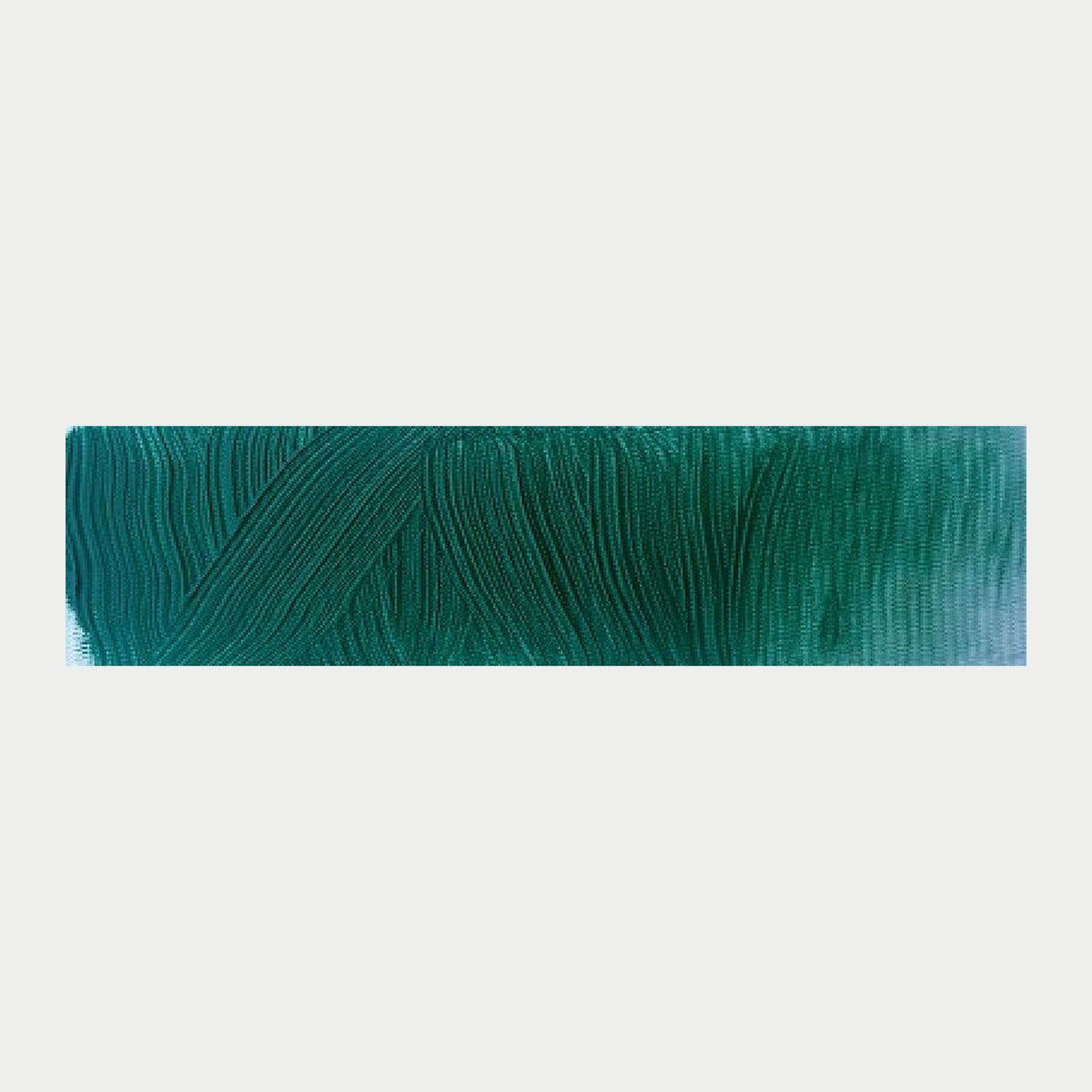
Chrysocolla green is a natural pigment powder ground from chrysocolla, a hydrous copper silicate mineral from the Democratic Republic of the Congo. Blue-green as a stone, it gives a soft, semi-transparent green when ground. This rare historic copper green suits egg tempera, watercolor, gouache and acrylic.
Key facts
- Color: soft green
- Pigment type: Natural mineral pigment (copper silicate)
- Composition: hydrous copper silicate, (Cu,Al)2H2Si2O5(OH)4·nH2O
- Origin: Democratic Republic of the Congo (supplier data)
- Also known as: cedar green (historic name)
- Opacity: semi-transparent
- Lightfastness: 8 of 8 on the Blue Wool Scale (supplier data)
- Chemical resistance: decomposed by acids, alkalis and heat
- Suitable for: acrylic, egg tempera, watercolor, gouache
- Not recommended for: fresco and lime plaster (alkalis decompose it)
- Packaging: 25 g jar · 1 kg bag
How to use
Work the powder into gum arabic for watercolor and gouache, egg yolk for tempera, or acrylic medium with a palette knife or a light muller. Chrysocolla is a soft mineral, so grind gently: over-grinding makes mineral greens paler. Its semi-transparent green suits washes and glazes over a light ground. Keep it away from lime, acids and heat, and store it dry.
About chrysocolla
The name comes from the Greek for gold and glue: Theophrastus used it in 315 BC for a material used to solder gold. Chrysocolla forms in the oxidized zones of copper deposits. As a pigment it has been reported in Twelfth Dynasty Egyptian tombs, and in the 16th and 17th centuries it was used in watercolor under the name cedar green.
Safety
Contains copper compounds: harmful if swallowed. Handle dry pigment with care: avoid breathing the dust and contact with eyes. Wear a dust mask (FFP2/N95) and gloves when working with the powder, work in a well-ventilated area and wipe up spills with a damp cloth. Do not eat, drink or smoke while working; wash your hands afterwards. Keep away from children and pets. For artistic and technical use only — not for cosmetics, food or tattoos.
FAQ
Is chrysocolla suitable for fresco?
No. Chrysocolla is decomposed by alkalis such as lime, as well as by acids and heat, so use it in tempera, watercolor, gouache or acrylic.
Is chrysocolla lightfast?
Yes. It is stable to light, and our supplier rates it 8 of 8 on the Blue Wool Scale.
How does chrysocolla differ from malachite?
Both are natural copper minerals. Malachite is a copper carbonate that fizzes in acid; chrysocolla is a hydrous copper silicate, blue-green as a stone, which grinds to a gentle green.
Shipping & Returns
Shipping & Returns


More experience
If you need other volumes of pigments, please contact us for an individual cost calculation.