


COLIBRI PIGMENTS LLC
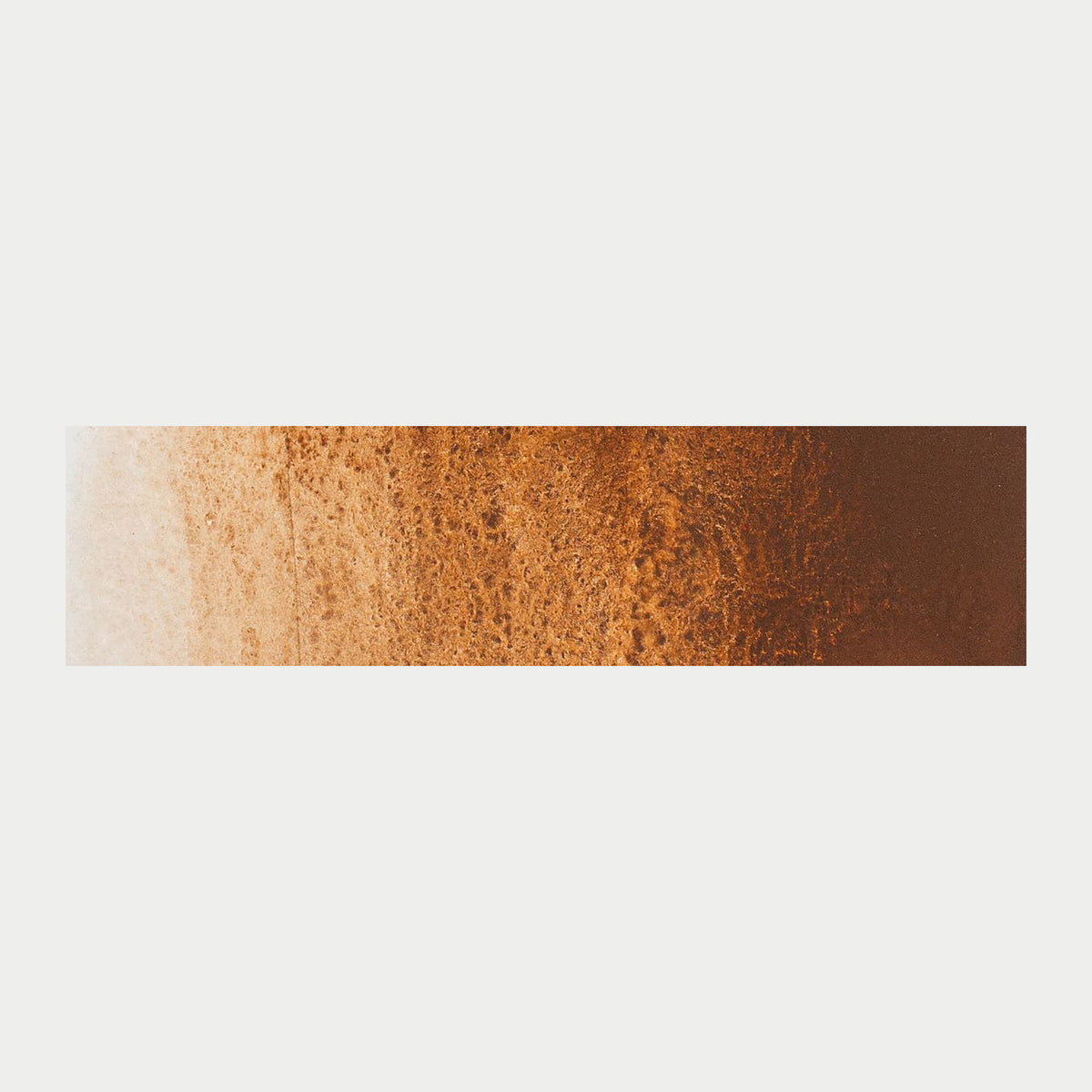
Kursk brown
Kursk brown
Couldn't load pickup availability
Kursk brown is a natural earth pigment ground from iron ore: a rock of goethite and hematite, the yellow-brown and red iron oxides, which together give a dark chocolate brown. It is lightfast (8 of 8 in supplier tests) and lime-proof, for shadows, glazes and earth tones in oil, egg tempera, watercolor, fresco and plaster.
Key facts
- Color: dark chocolate brown
- Pigment type: Natural earth pigment (iron ore)
- Composition: goethite, FeO(OH), with hematite, Fe2O3 (supplier data)
- Opacity: semi-transparent
- Lightfastness: 8 of 8 on the Blue Wool Scale (supplier data)
- Chemical resistance: alkali 5/5, lime 5/5 (supplier data, 5 = best); stable in weak acids, dissolved by strong mineral acids
- Suitable for: oil, acrylic, egg tempera, watercolor, gouache, fresco (lime), lime and cement plaster, ceramics
- Packaging: 50 g jar · 1 kg bag
How to use
It disperses readily in linseed oil, egg yolk, gum arabic and acrylic medium; mull it with a palette knife or muller. Thin layers glaze as a transparent warm brown, heavier ones build deep shadows. Avoid heat unless you want a redder color: above about 180 °C the goethite begins to lose water, and at 270–300 °C it turns into red-brown iron oxide, which also affects fired ceramics. It is compatible with all other pigments.
About Kursk brown
The name means “brown from Kursk” and refers to the Kursk region of Russia, home of the Kursk Magnetic Anomaly: iron-ore deposits so large that they cause the largest magnetic anomaly on Earth. Ores of hydrated iron oxide like this one are known in Russian as brown iron ores; depending on origin and composition, their varieties have been called bog ore, iron ochre, umber or Siena earth.
Safety
Natural earths can contain crystalline silica: avoid breathing the dust. Handle dry pigment with care: avoid breathing the dust and contact with eyes. Wear a dust mask (FFP2/N95) and gloves when working with the powder, work in a well-ventilated area and wipe up spills with a damp cloth. Do not eat, drink or smoke while working; wash your hands afterwards. Keep away from children and pets. For artistic and technical use only — not for cosmetics, food or tattoos.
FAQ
What is Kursk brown made of?
Iron ore: goethite, a hydrated iron oxide, with hematite, according to the supplier. It is a natural earth pigment, not a synthetic Mars brown.
How is it different from umber?
Umbers get their dark, cool tone and fast drying from 5–20% manganese oxides. Kursk brown is specified by the supplier as goethite and hematite, with no manganese listed.
Shipping & Returns
Shipping & Returns



More experience
If you need other volumes of pigments, please contact us for an individual cost calculation.