


COLIBRI PIGMENTS LLC
Lazurite Afgan First class
Lazurite Afgan First class
Couldn't load pickup availability
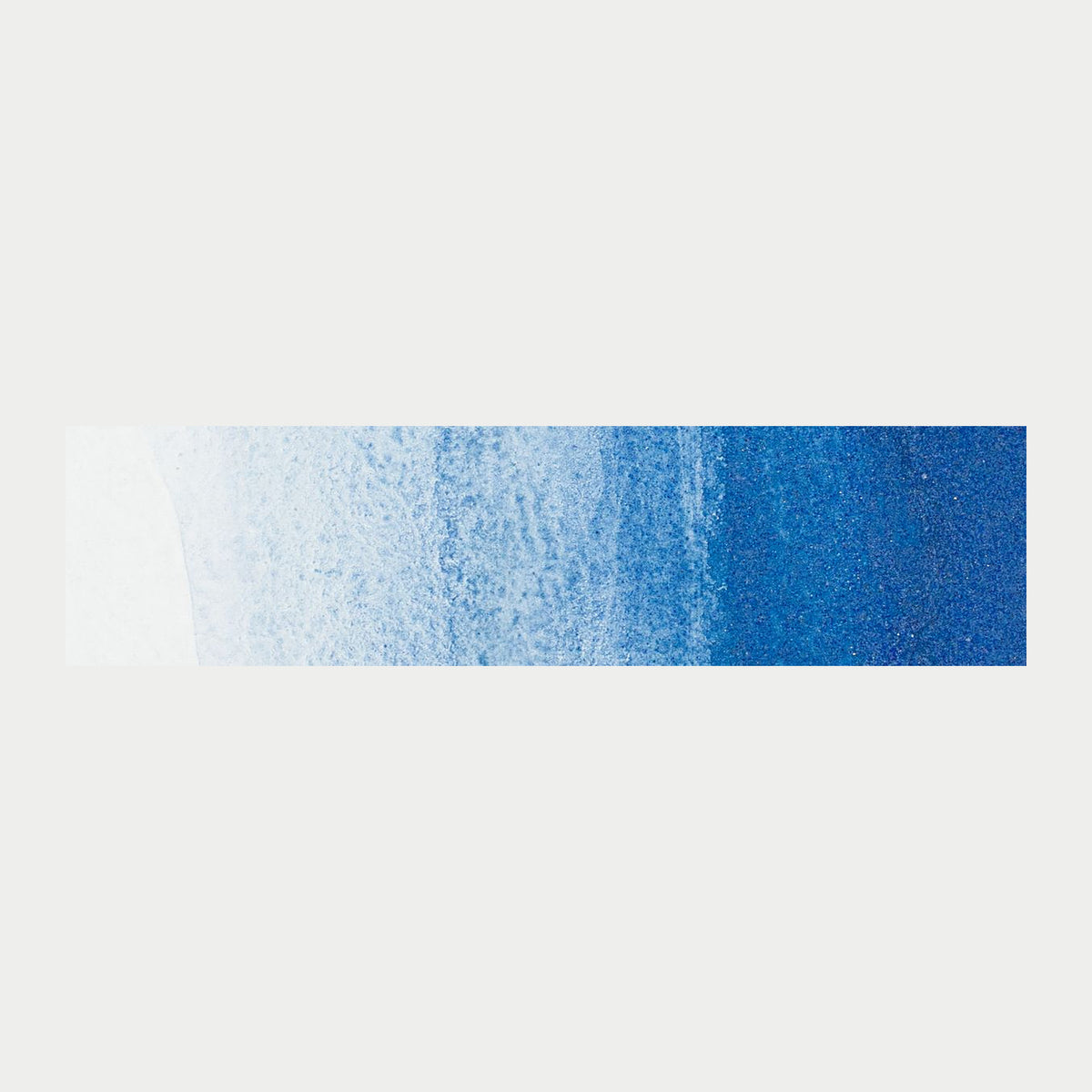
Lazurite Afgan First class (FC on the label) is natural ultramarine: Afghan lapis lazuli ground into a pigment powder. It is our second-highest grade, a rich violet-blue with a little less depth than Extra class, and like all lapis lazuli it is lightfast and lime-resistant, for oil, egg tempera, watercolor, gouache and fresco.
Key facts
- Color: rich violet-blue, slightly lighter than Extra class
- Pigment type: Natural mineral pigment
- Colour Index: PB29 (C.I. 77007)
- Composition: lapis lazuli; its blue mineral is lazurite, (Na,Ca)8(AlSiO4)6(SO4,S,Cl)2, with calcite, diopside and pyrite
- Origin: Afghanistan
- Also known as: lapis lazuli, natural ultramarine
- Opacity: semi-transparent (glazing)
- Lightfastness: 8 of 8 on the Blue Wool Scale (supplier data)
- Chemical resistance: alkali 5/5, lime 5/5 (supplier data, 5 = best); decomposes in acids, releasing hydrogen sulfide
- Suitable for: oil, acrylic, egg tempera, watercolor, gouache, fresco (lime)
- Packaging: 50 g jar · 1 kg bag
How to use
Disperse the powder in your binder with a palette knife or a few gentle passes of the muller: egg yolk for tempera, gum arabic for watercolor and gouache, acrylic medium, or linseed oil. For fresco, paint it in water onto fresh lime plaster, which it resists. Keep the grind fairly coarse, because finer particles look paler. In oil its low hiding power makes it a glazing color, best laid over a light underpainting. Avoid contact with acids.
About lapis lazuli
Medieval painters did not simply grind the stone. Cennino Cennini, writing around 1400, describes kneading powdered lapis into a dough of resin, mastic and wax with linseed oil, then drawing the blue out with warm lye; the first extracts gave the best color. The name ultramarine, Latin for beyond the sea, recalls that the stone reached Europe from Asia.
Safety
Lapis lazuli contains sulfur: contact with acids releases hydrogen sulfide gas (rotten-egg smell). Handle dry pigment with care: avoid breathing the dust and contact with eyes. Wear a dust mask (FFP2/N95) and gloves when working with the powder, work in a well-ventilated area and wipe up spills with a damp cloth. Do not eat, drink or smoke while working; wash your hands afterwards. Keep away from children and pets. For artistic and technical use only — not for cosmetics, food or tattoos.
FAQ
What does First class (FC) mean?
It is the second of our three Afghan lapis grades, which are sorted by color: Extra class is the deepest, First class a rich blue with slightly less depth, Second class (SC) lighter. The difference comes from how much blue lazurite the stone contains compared with white calcite and other minerals.
Is lapis lazuli lightfast?
Yes. Our supplier rates it 8 of 8 on the Blue Wool Scale, and it also resists alkali and lime, so it suits fresco. Only acids harm it, releasing hydrogen sulfide.
Shipping & Returns
Shipping & Returns



More experience
If you need other volumes of pigments, please contact us for an individual cost calculation.