


COLIBRI PIGMENTS LLC
Manganese violet
Manganese violet
Couldn't load pickup availability
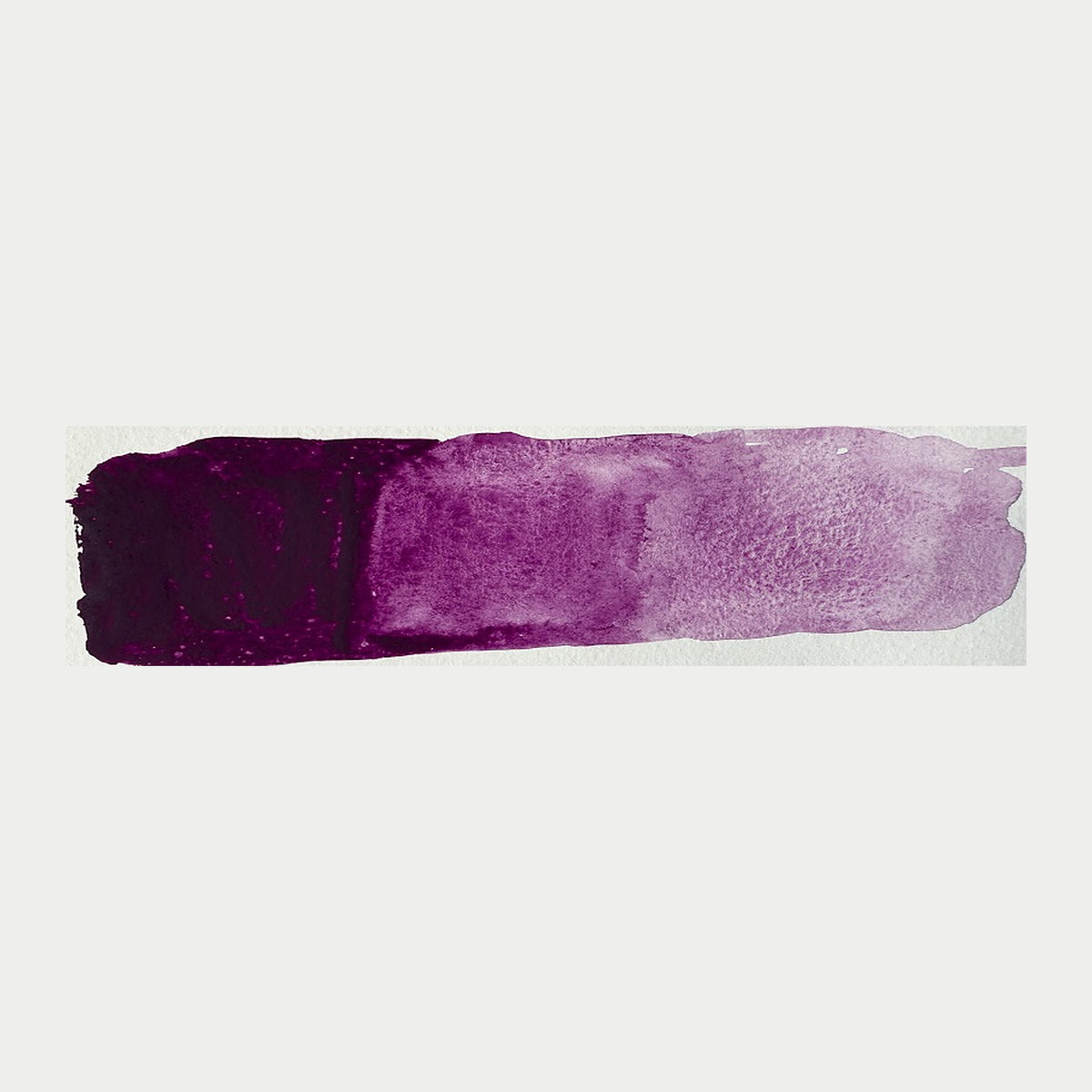
Manganese violet is a synthetic inorganic pigment powder, manganese ammonium pyrophosphate (PV16). It gives a saturated, semi-transparent violet that is very lightfast and well suited to glazes in oil, acrylic, egg tempera, watercolor and gouache. It is not lime-proof, so it is not used in fresco.
Key facts
- Color: saturated violet
- Pigment type: Synthetic inorganic pigment (manganese phosphate)
- Colour Index: PV16 (C.I. 77742)
- Composition: manganese ammonium pyrophosphate, NH4MnP2O7
- Origin: synthetic
- Also known as: Nuremberg violet, permanent violet, mineral violet
- Opacity: semi-transparent (glazing)
- Lightfastness: 7.5–8 of 8 on the Blue Wool Scale (supplier data)
- Chemical resistance: resists dilute acids; strong acids and alkalis decompose it, and alkalis release ammonia
- Suitable for: oil, acrylic, egg tempera, watercolor, gouache
- Not recommended for: fresco and other lime-based or strongly alkaline paints
- Packaging: 25 g jar · 1 kg bag
How to use
Mull the powder into linseed oil, acrylic medium, egg yolk or gum arabic with a palette knife or muller. Its oil absorption is moderate (about 33 g per 100 g, supplier data). The hiding power is modest, so manganese violet shows best in glazes and clean violet mixtures over a light ground. In oil it may darken slightly over many years (supplier note). Keep it away from lime and other strong alkalis, which decompose it.
About manganese violet
Manganese violet was developed in the 1860s by E. Leykauf as a cheaper substitute for cobalt violet and was first called Nuremberg (Nürnberg) violet. The first documented production as an artists' pigment, by Winsor & Newton, dates from 1890. It is valued for its permanence and high lightfastness, although its hiding power is poor.
Safety
Do not mix it with lime or other strong alkalis: they decompose the pigment and release ammonia gas. Handle dry pigment with care: avoid breathing the dust and contact with eyes. Wear a dust mask (FFP2/N95) and gloves when working with the powder, work in a well-ventilated area and wipe up spills with a damp cloth. Do not eat, drink or smoke while working; wash your hands afterwards. Keep away from children and pets. For artistic and technical use only — not for cosmetics, food or tattoos.
FAQ
Can manganese violet be used in fresco?
No. Lime is strongly alkaline and decomposes manganese violet. Use it in oil, acrylic, egg tempera, watercolor or gouache.
Is manganese violet lightfast?
Yes. Our supplier rates it 7.5–8 of 8 on the Blue Wool Scale, and references rate PV16 ASTM I in oil and watercolor.
How does it differ from cobalt violet?
Both are permanent inorganic violets. Manganese violet is semi-transparent and was made as a cheaper substitute for cobalt violet, which covers better but contains cobalt.
Shipping & Returns
Shipping & Returns


More experience
If you need other volumes of pigments, please contact us for an individual cost calculation.