


COLIBRI PIGMENTS LLC
Mars red-brown
Mars red-brown
Couldn't load pickup availability
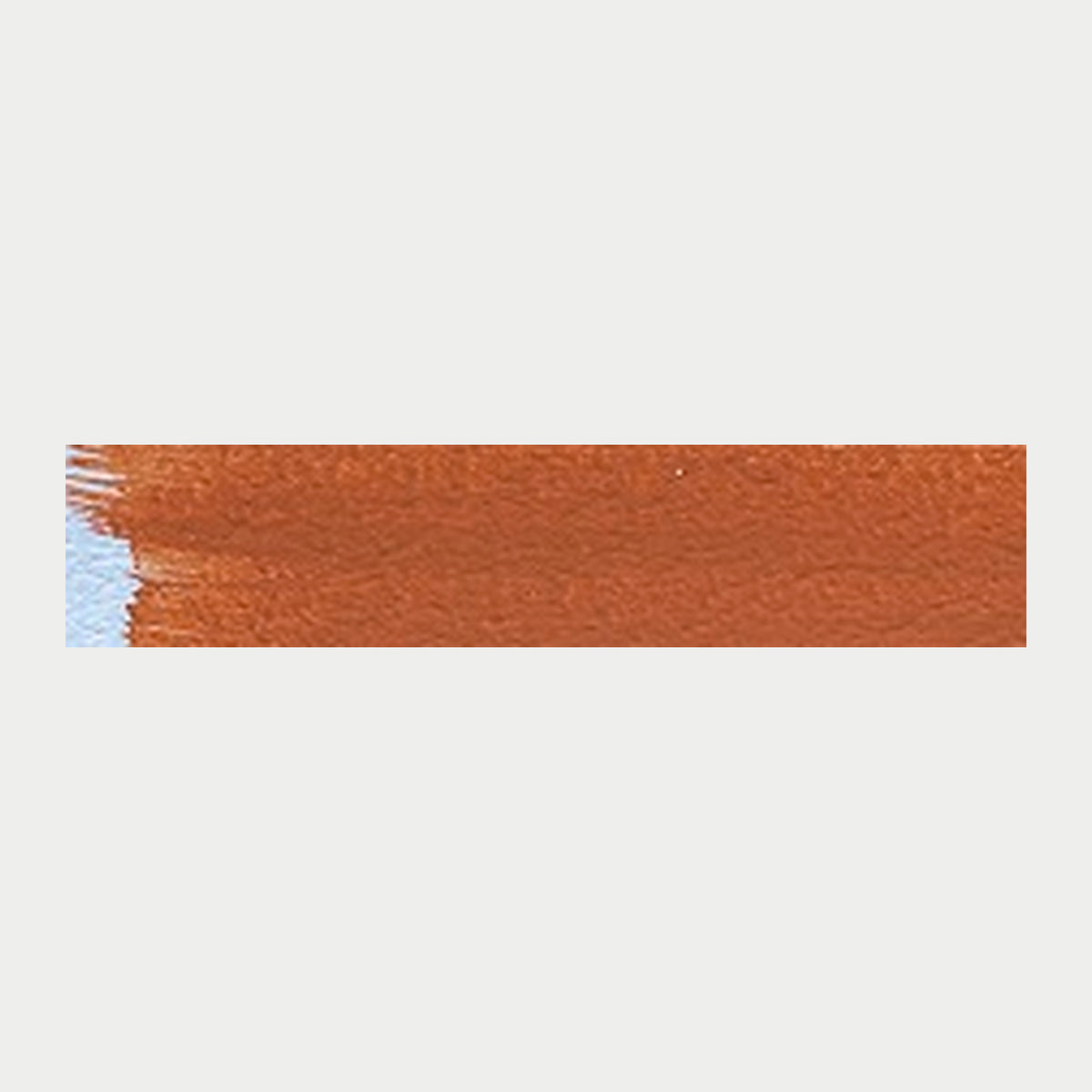
Mars red-brown is a synthetic iron oxide pigment powder, sold by our supplier as Mars orange: Mars yellow gently heated until part of its water is driven off. It looks orange as a powder and in tints, red-orange in thin glazes and red-brown in thick layers. Opaque, lightfast and lime-proof, it suits oil, acrylic, tempera, watercolor and fresco.
Key facts
- Color: orange in tints, red-orange in glazes, red-brown in thick layers
- Pigment type: Synthetic inorganic pigment (iron oxide)
- Colour Index: PY42 (C.I. 77492)
- Composition: iron(III) oxide-hydroxide, FeO(OH), partly dehydrated toward red Fe2O3 by heating to 200–250 °C
- Origin: synthetic
- Also known as: Mars orange
- Opacity: opaque
- Lightfastness: 8 of 8 on the Blue Wool Scale (supplier data)
- Chemical resistance: alkali 5/5, lime 5/5 (supplier data, 5 = best); stable in weak acids, dissolved by strong mineral acids
- Suitable for: oil, acrylic, egg tempera, watercolor, gouache, fresco (lime), lime and cement plaster
- Not recommended for: ceramics: firing turns it into red iron oxide
- Packaging: 25 g jar · 1 kg bag
How to use
Mix the powder into linseed oil, egg yolk, gum arabic or acrylic medium with a palette knife or muller; for fresco, grind it in water and paint into fresh lime plaster. In oil it forms a smooth, plastic paste that spreads easily, and like other iron oxides it dries well. Use it thick for warm red-browns, thin for red-orange glazes, or with white for clear oranges. It mixes with practically all other pigments (supplier data).
About Mars red-brown
The water content of an iron oxide sets its shade. Mars yellow is the hydrated oxide; heating drives the water off step by step, giving Mars orange at 200–250 °C and Mars red at about 400 °C (supplier data). Mars colors appeared as a trade name in the late 18th century and are named after Mars, the alchemists' name for iron.
Safety
Handle dry pigment with care: avoid breathing the dust and contact with eyes. Wear a dust mask (FFP2/N95) and gloves when working with the powder, work in a well-ventilated area and wipe up spills with a damp cloth. Do not eat, drink or smoke while working; wash your hands afterwards. Keep away from children and pets. For artistic and technical use only — not for cosmetics, food or tattoos.
FAQ
Why is it called red-brown when the powder looks orange?
The name describes how it paints in thick layers, where it reads red-brown. In tints and as a powder it is orange, and our supplier sells it as Mars orange.
Is Mars red-brown a natural pigment?
No. It is a synthetic iron oxide made from Mars yellow, chemically like natural iron oxide earths but free of clay.
Can I use it in fresco?
Yes. The supplier rates its lime and alkali resistance 5 of 5, and iron oxides are classic fresco pigments.
Shipping & Returns
Shipping & Returns



More experience
If you need other volumes of pigments, please contact us for an individual cost calculation.