


COLIBRI PIGMENTS LLC
Prussian blue
Prussian blue
Couldn't load pickup availability
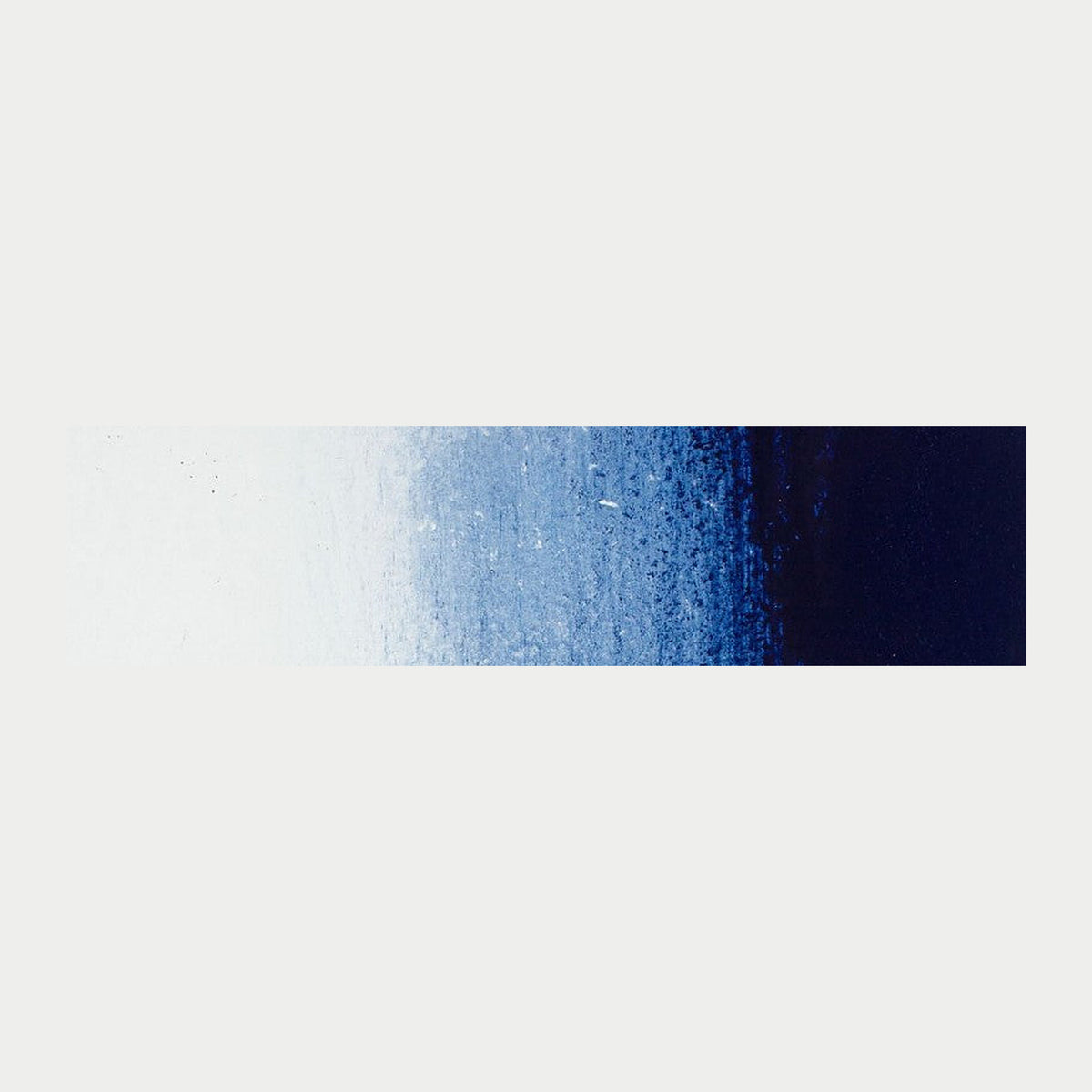
Prussian blue is a synthetic inorganic pigment powder, iron hexacyanoferrate, first made in Berlin in the early 1700s: the first modern synthetic pigment. Also called Berlin or Paris blue, it is an intense, deep greenish blue with very high tinting strength, for oil, watercolor, gouache and tempera, but never for lime.
Key facts
- Color: very deep greenish blue, almost black in masstone
- Pigment type: Synthetic inorganic pigment (iron cyanide complex)
- Colour Index: PB27 (C.I. 77510)
- Composition: iron(III) hexacyanoferrate(II), Fe4[Fe(CN)6]3·xH2O (may also contain potassium or ammonium)
- Origin: synthetic
- Also known as: Berlin blue, Paris blue, iron blue, Milori blue
- Opacity: transparent in thin layers
- Lightfastness: 8 of 8 on the Blue Wool Scale (supplier data)
- Chemical resistance: acid 5/5, alkali 1/5, lime 1/5 (supplier data, 5 = best): alkalis turn it brown
- Suitable for: oil, acrylic (test your medium first), egg tempera, watercolor, gouache
- Not recommended for: fresco, lime and cement plaster, silicate and alkaline emulsion paints
- Packaging: 25 g jar · 1 kg bag
How to use
Use it sparingly: its tinting strength is very high. Mull it thoroughly, because the dry pigment forms hard aggregates and needs a fair amount of oil; it also binds in gum arabic, egg yolk or acrylic medium (test your acrylic first). Never mix it with lime, chalk or other alkaline materials, which turn it brown. Pale mixtures with much white can fade in strong light and recover in the dark. Store it dry, as damp spoils it.
About Prussian blue
Prussian blue was made by accident in Berlin around 1704–1706, when the color maker Johann Jacob Diesbach was trying to prepare a red. It was first described in print in 1710, its recipe was published in 1724, and by 1800 it was in common use. Hokusai used it prominently in his Thirty-six Views of Mount Fuji.
Safety
Do not heat it or mix it with strong acids: this can release toxic hydrogen cyanide. Handle dry pigment with care: avoid breathing the dust and contact with eyes. Wear a dust mask (FFP2/N95) and gloves when working with the powder, work in a well-ventilated area and wipe up spills with a damp cloth. Do not eat, drink or smoke while working; wash your hands afterwards. Keep away from children and pets. For artistic and technical use only — not for cosmetics, food or tattoos.
FAQ
Can I use Prussian blue in fresco or lime plaster?
No. Alkalis decompose it into brown iron hydroxide (supplier data: alkali 1/5, lime 1/5), so it is unsuitable for fresco, lime, cement and silicate paints.
Is Prussian blue toxic?
Its toxicity is low: the cyanide groups are tightly bound to iron, and a pharmaceutical grade is even used as a medicine. But heating it or mixing it with strong acids can release toxic hydrogen cyanide.
Shipping & Returns
Shipping & Returns



More experience
If you need other volumes of pigments, please contact us for an individual cost calculation.