


COLIBRI PIGMENTS LLC
Viridian
Viridian
Couldn't load pickup availability
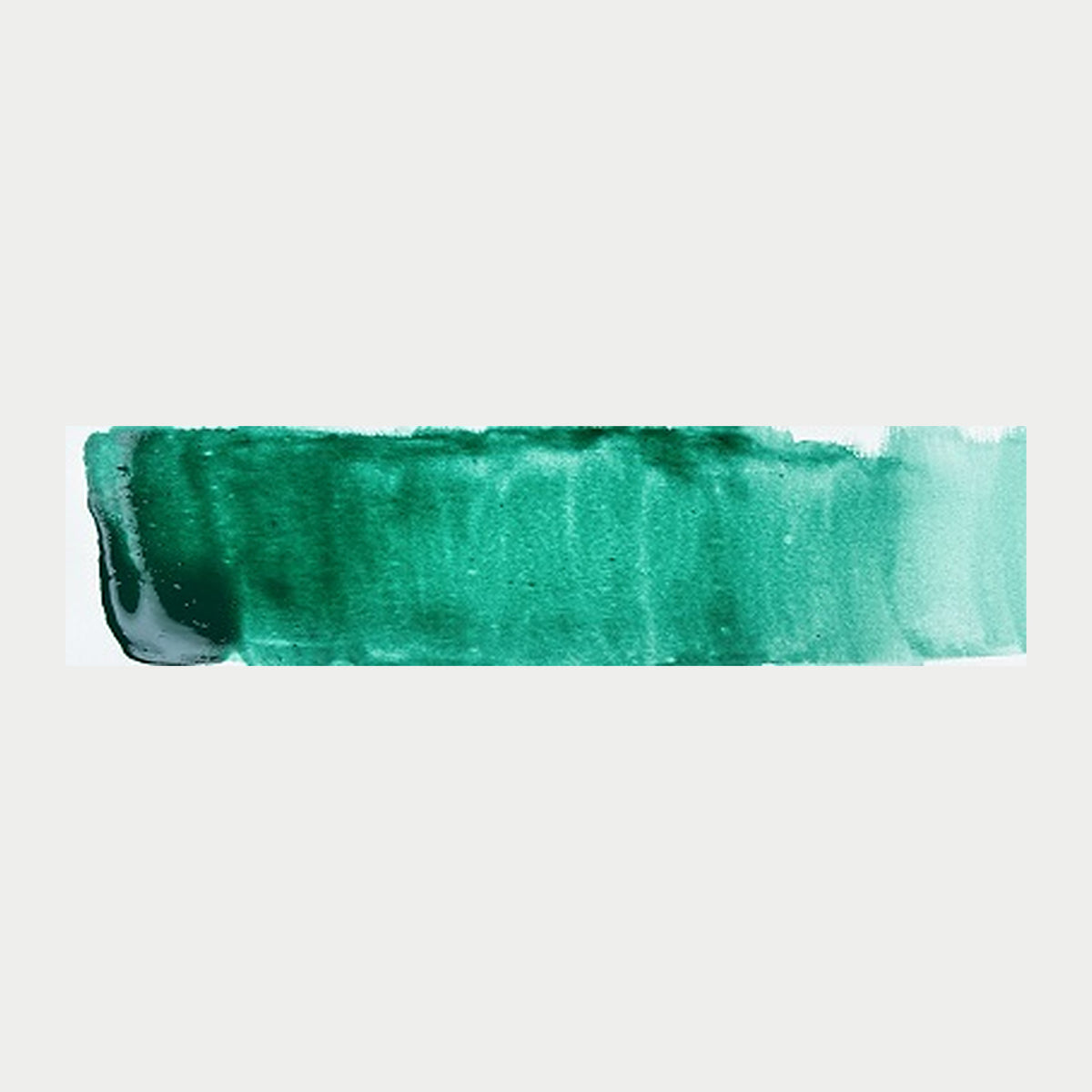
Viridian is a synthetic inorganic pigment powder, hydrated chromium(III) oxide (PG18): a cool, transparent emerald green. It is highly permanent and lime-resistant, prized for brilliant glazes in oil and watercolor, and also suitable for acrylic, egg tempera, gouache, fresco and lime plaster.
Key facts
- Color: cool emerald green, transparent
- Pigment type: Synthetic inorganic pigment (hydrated chromium oxide)
- Colour Index: PG18 (C.I. 77289)
- Composition: hydrated chromium(III) oxide, Cr2O3·2H2O
- Origin: synthetic
- Also known as: Guignet's green, transparent oxide of chromium, vert émeraude
- Opacity: transparent
- Lightfastness: 8 of 8 on the Blue Wool Scale (supplier data)
- Chemical resistance: alkali 5/5, lime 5/5, acid 5/5 (supplier data, 5 = best)
- Suitable for: oil, acrylic, egg tempera, watercolor, gouache, fresco (lime), lime and cement plaster
- Not recommended for: ceramics and other high-heat uses (above about 200 °C it loses water and turns into chromium oxide green)
- Packaging: 10 g jar · 1 kg bag
How to use
Mull the powder thoroughly into linseed oil, acrylic medium, egg yolk or gum arabic. Viridian absorbs a lot of oil (about 80–100 g per 100 g, supplier data), so add oil gradually and use no more than needed to avoid yellowing. Thin layers glaze a brilliant emerald green, thick layers look dark green, and mixtures with white give cool bluish greens. It dries fairly quickly in oil.
About viridian
Viridian was first prepared in Paris in 1838 by the color maker Pannetier and his assistant Binet. In 1859 the French chemist C. E. Guignet patented a cheaper process that made it widely available, hence the name Guignet's green. J. M. W. Turner reportedly used it as early as 1840, and Winsor & Newton listed it in 1849.
Safety
Viridian is a chromium(III) compound, far less hazardous than chromates (hexavalent chromium), but pigment grades may contain traces of soluble hexavalent chromium: avoid breathing the dust. Handle dry pigment with care: avoid breathing the dust and contact with eyes. Wear a dust mask (FFP2/N95) and gloves when working with the powder, work in a well-ventilated area and wipe up spills with a damp cloth. Do not eat, drink or smoke while working; wash your hands afterwards. Keep away from children and pets. For artistic and technical use only — not for cosmetics, food or tattoos.
FAQ
What is the difference between viridian and chromium oxide green?
Both are chromium(III) oxides. Viridian (PG18) is the hydrated form: transparent, brighter and cooler. Chromium oxide green (PG17) is anhydrous: opaque, duller and more olive.
Can viridian be used in fresco?
Yes. Our supplier rates it 5 of 5 for lime and alkali resistance and recommends it for fresco and for lime and cement plaster.
Shipping & Returns
Shipping & Returns


More experience
If you need other volumes of pigments, please contact us for an individual cost calculation.